Exhibition
Uncovering the Plausibilities: William Mapan’s Paysages Plausibles
Uncovering the Plausibilities: William Mapan’s Paysages Plausibles
by Tonya Lobato
•
9 Jun 2026
Uncovering the Plausibilities in William Mapan’s Paysages Plausibles
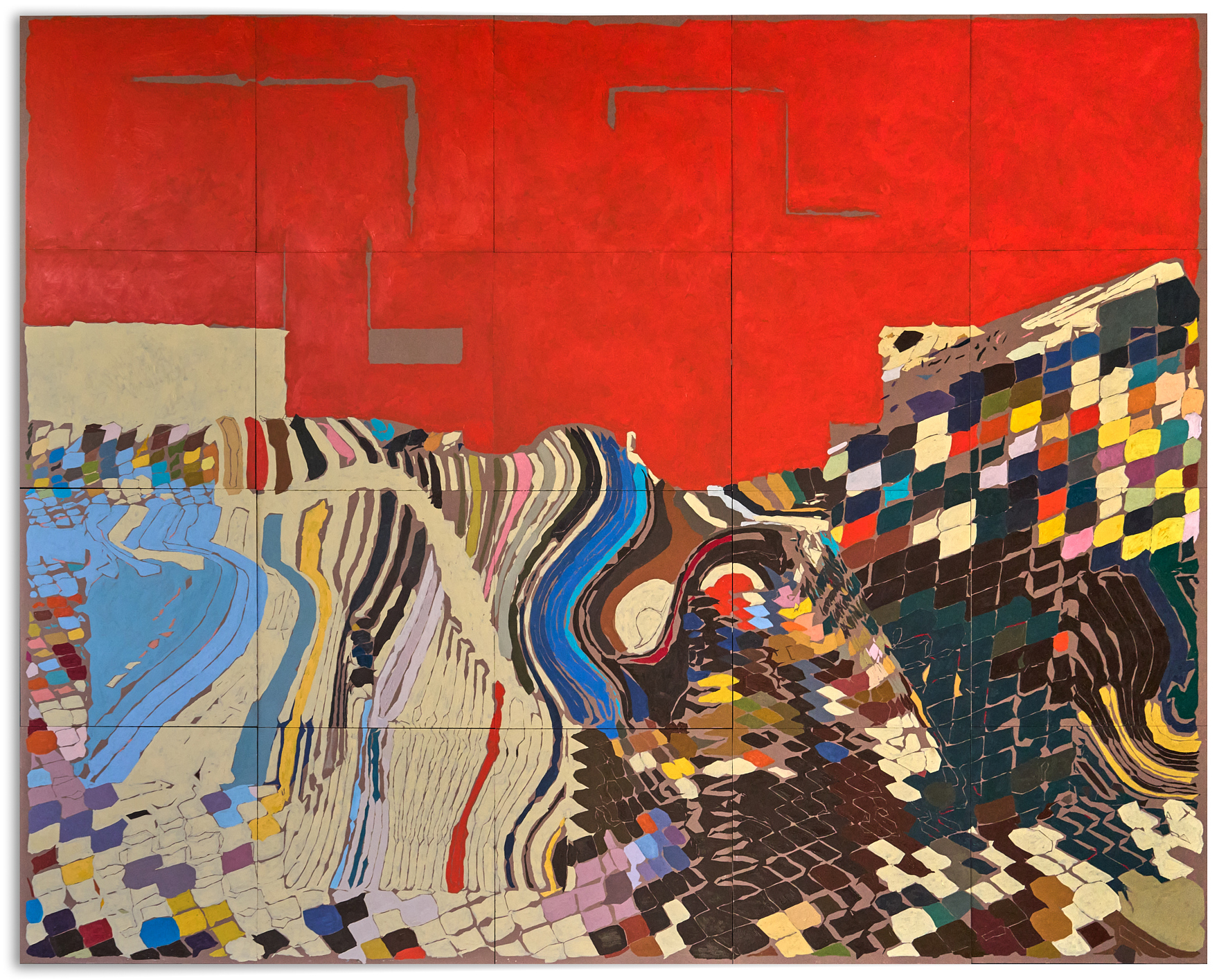
William Mapan is coming to Art Basel with Paysages Plausibles, a series of constructed landscapes, abstract representations of the natural world that prompt us to reflect on what we are seeing. The series comprises hand painted works, including one multi-paneled large scale painting, and live machine plotted works based on Mapan’s creative code. Across Paysages Plausibles, in the elements of the artwork, and through his detailed process, we can trace influences of some of the rule-breaking artists who have inspired him, Cézanne, David Hockney, and Helen Frankenthaler. There are also intriguing parallels to their unique ways of seeing and creating that have propelled artistic inquiry forward.
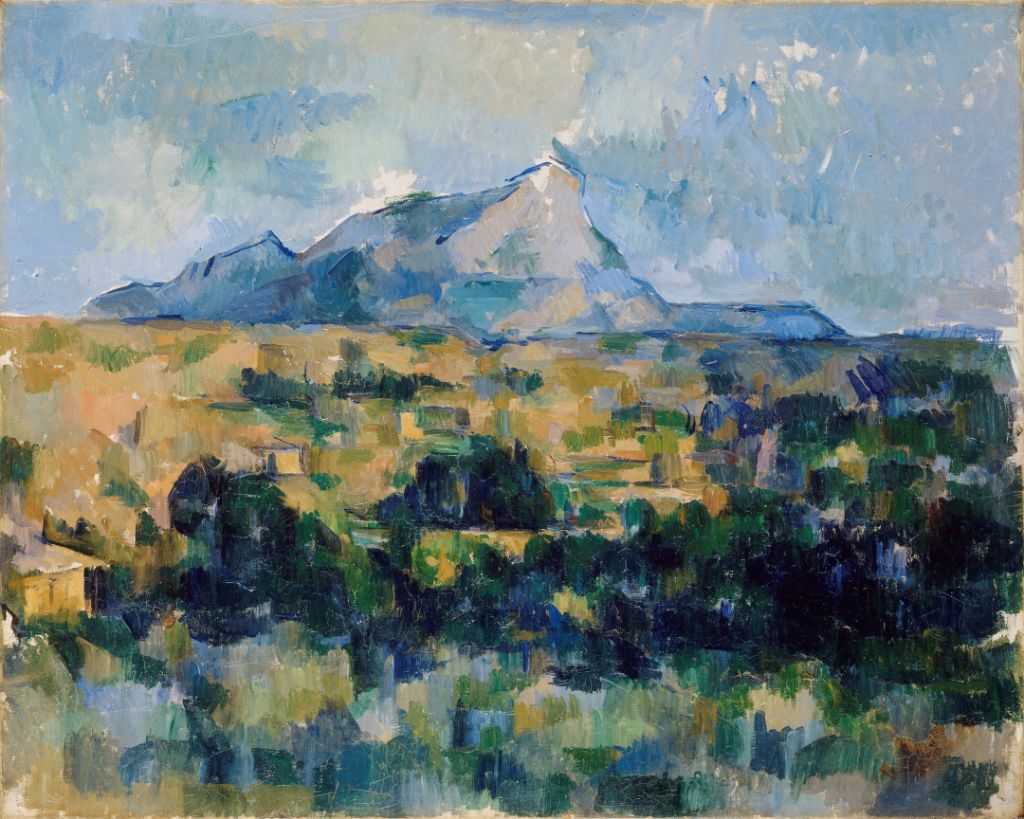
Constructed landscapes have a long history in art, beginning perhaps most notably with Cézanne’s revolutionary paintings en plein air, which brought captivating new perspectives to canvas. Cézanne was less interested in detail than he was in structure. He simplified complex forms into basic shapes and used contrasting colors as a means to set objects apart and strike compositional balance. Recognized by many as the artist who launched the era of modern art, he was a master of seeing things differently. David Hockney credits Cézanne as being the first artist “to see with two eyes.”
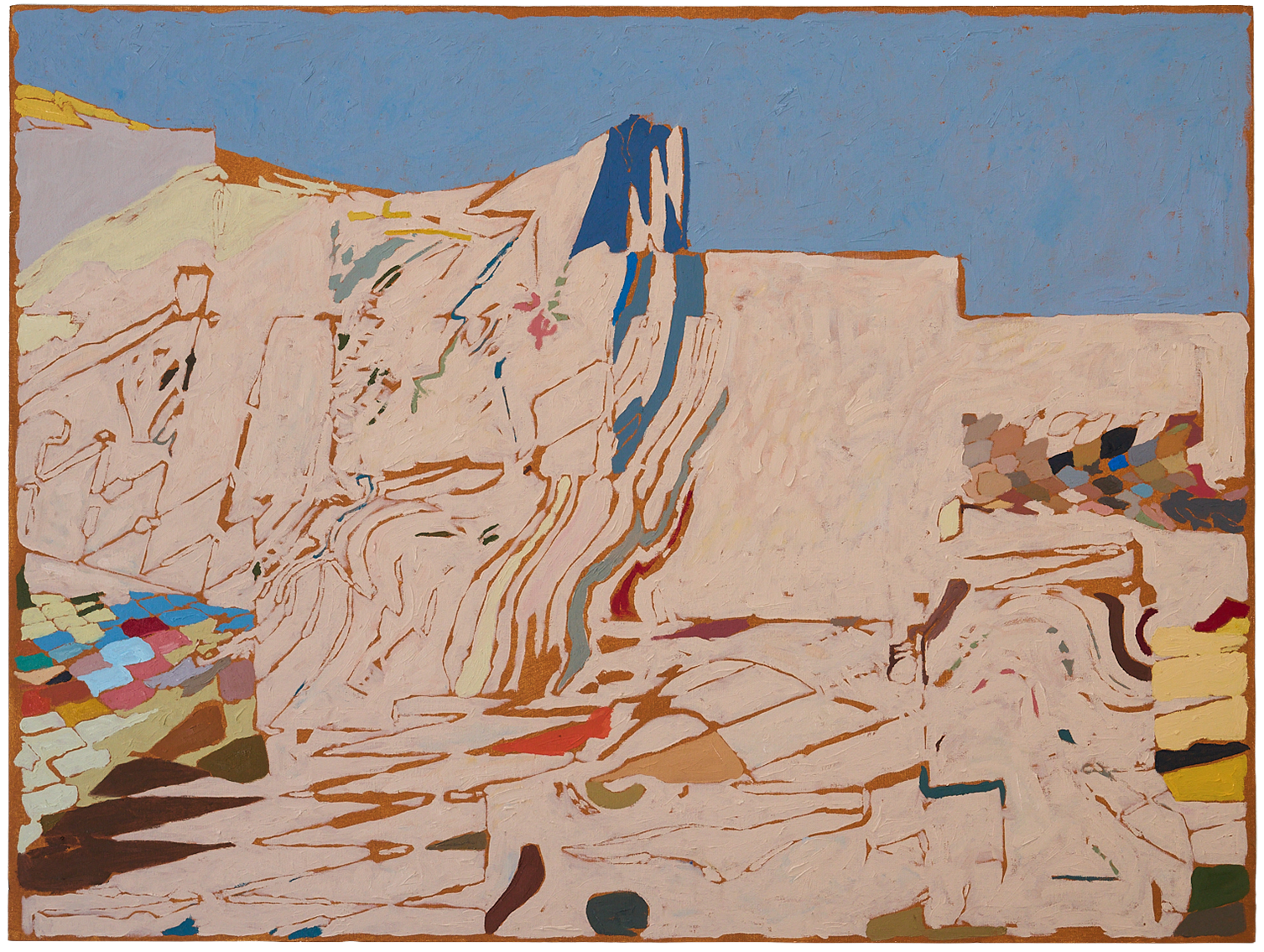
Mapan constructs his Paysages Plausibles paintings or “plausible landscapes,” which he describes as “surrealist theatres,” in a way that encourages viewers to recognize a coherence in the purposefully juxtaposed elements of shapes and colors: a seascape perhaps, or a mountaintop. The interpretation of the scene is up to each individual viewer, which is the artist’s intent.
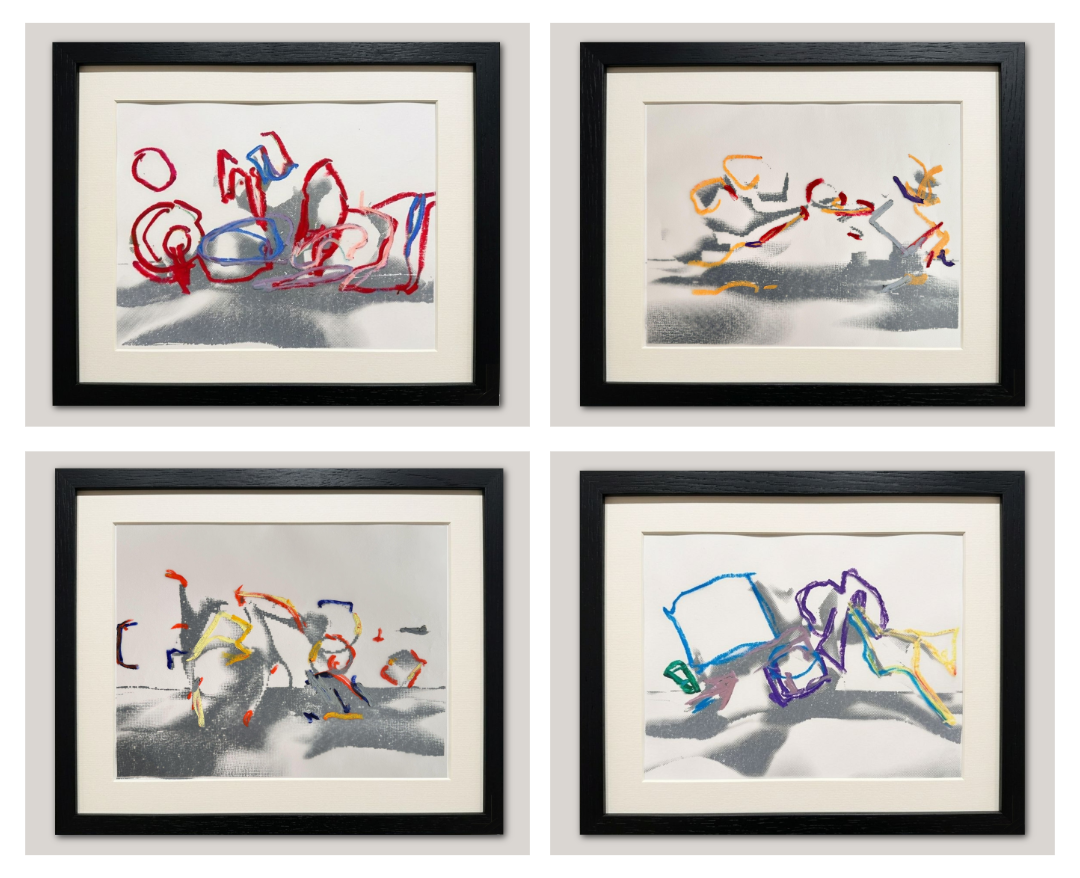
“Plausible” is an interesting word because it implies believability yet leaves room for uncertainty. Mapan’s artworks leave room for us, as viewers, to find something of our own. The paintings are plausible in the sense that, due to their abstract nature, we might see a certain landscape in the composition; or we might see something else. “Plausible” can also imply what is possible or likely to occur. With Mapan’s live plotted works, Dances on Shadows (DOS), generated by the collector using an algorithmic application, the works are plausible in the sense that before they materialize, no one, neither artist nor collector, can know what to expect: any number of outcomes are possible.
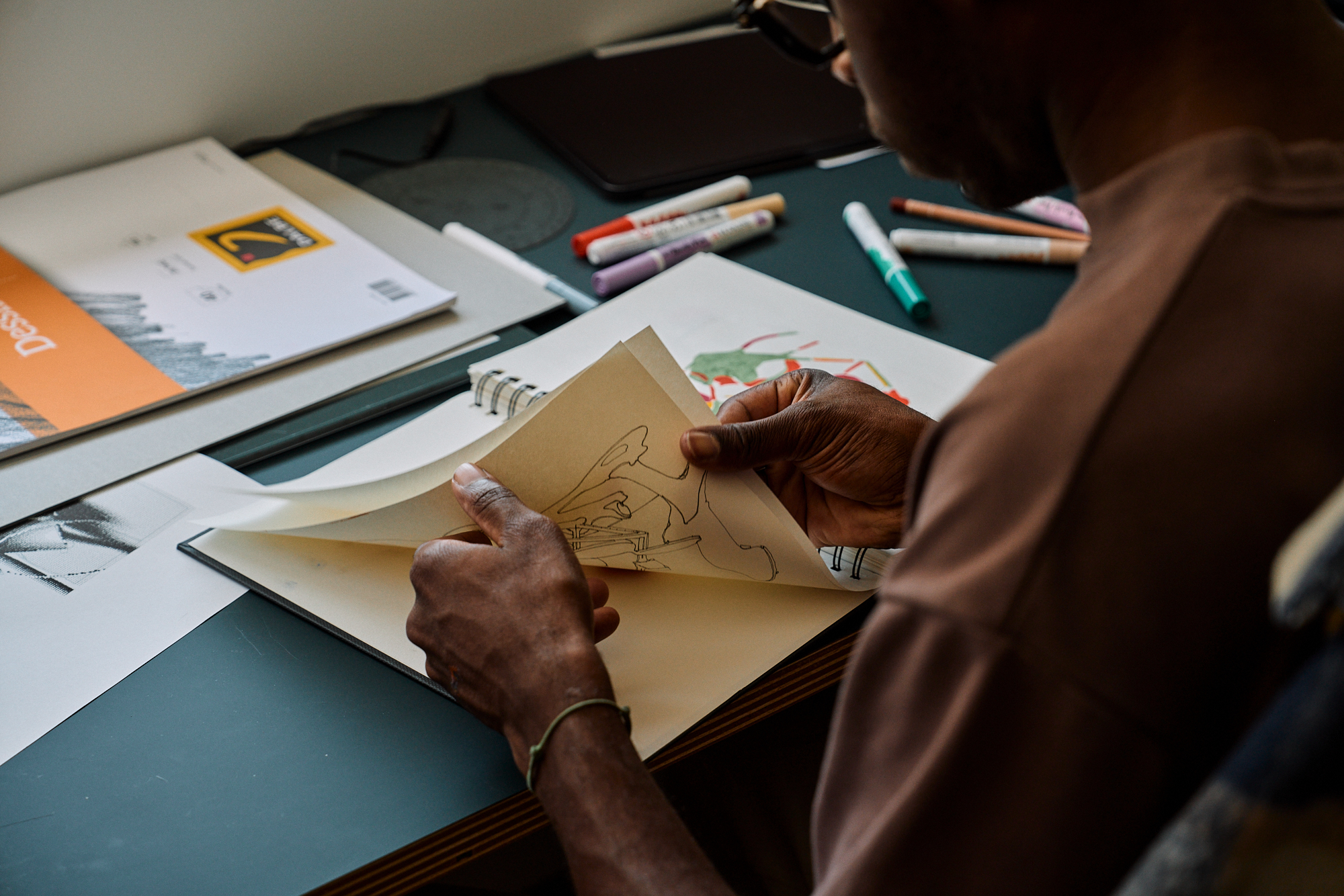
Like Cézanne, Mapan paints in oil on canvas and prioritizes structure and composition, but with a different mode of “seeing” that relies on computer feedback as an input that shapes the final outcomes. Mapan employs a layered multimedia process that is a back and forth between hand sketches and computational experimentation and requires many months of research. Through code, Mapan configures an algorithm that is able to assemble and rearrange a number of elements he has defined — shapes, images, textures, spaces, and colors — in an infinite number of different ways, but within his conditions, all according to his vision. The algorithm’s job is to introduce randomness, to provide for the element of unpredictability to Mapan’s “plausible landscapes,” but only to the extent that he allows: The possibilities must fall within the artist’s constraints.
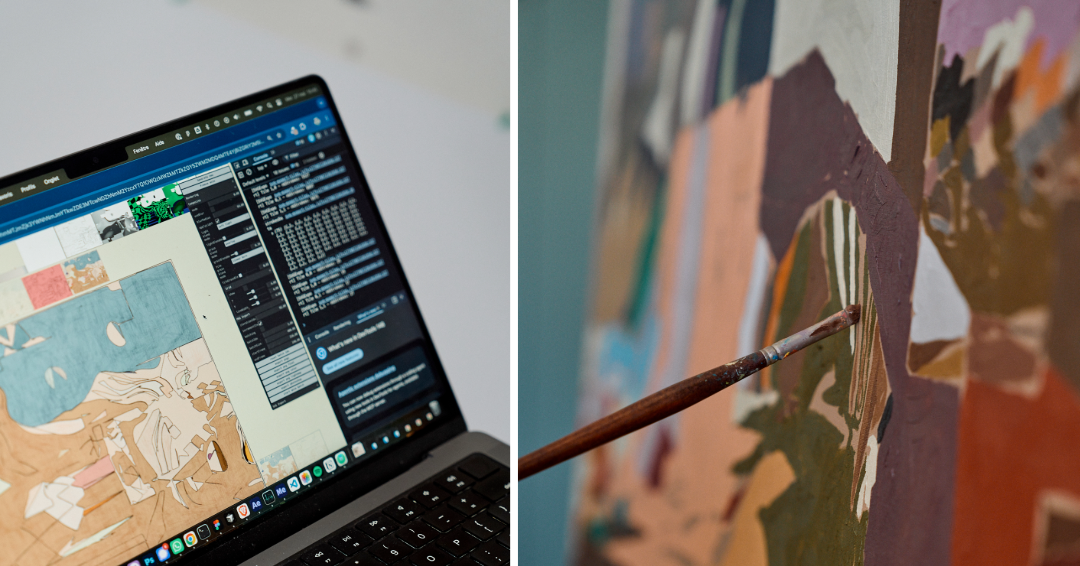
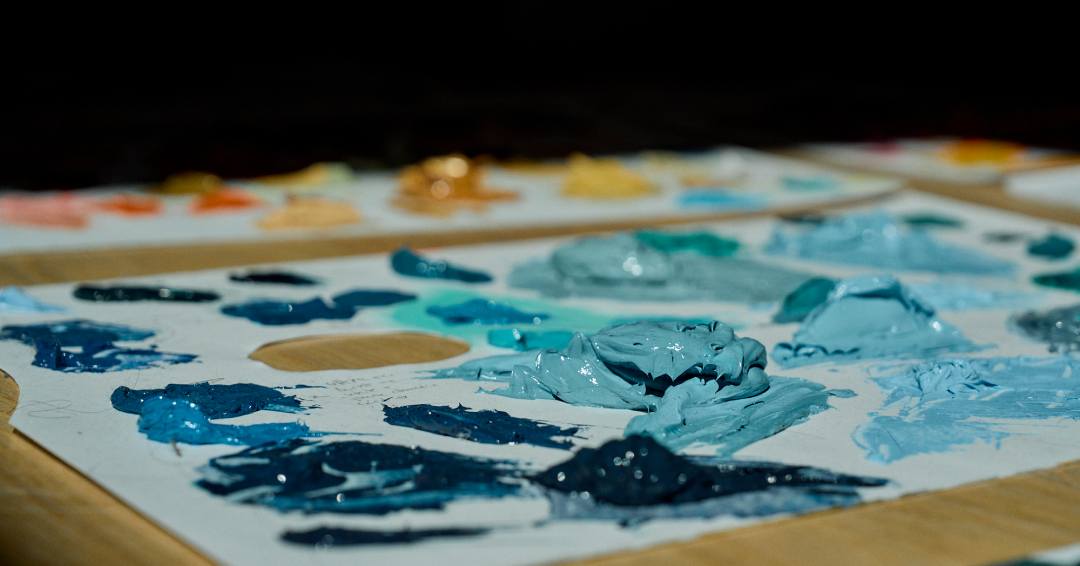
Mapan incorporates real-world references, like favorite places and photographs of settings, as much as memories and imagination. But the artwork’s final form relies on the primary medium of code, a sequence of data purposefully strung together by Mapan. His thoughtful compositions show off a skillful application of color that references nature, much like his inspiration, Helen Frankenthaler, who created vast abstract landscapes with her innovative soak-stain technique. Using oil paint heavily diluted with turpentine, she achieved a watercolor effect, but more vibrant, saturating huge swaths of canvas with brilliant color. Mapan starts with a carefully hand-mixed palette of natural pigments that he replicates in digital form, later returning to canvas again and achieving near-identical results.
In the feedback loop that runs from physical to digital and back again, Mapan’s process opens the door to the unexpected, to new ways of seeing. One algorithmic iteration can inspire more exploration, via sketches or research, which in turn can reshape the code and define a new painting: a hand-created reinterpretation of the digital counterpart.
David Hockney, another source of inspiration for Mapan, has an appreciation for experimentation and a practice that also includes a back and forth between media and painting. He would likely be intrigued by Mapan’s approach to art. Hockney believes that the artist’s job is to provide a viewpoint, through which others can see something new. He says of Picasso’s owl “It isn’t an owl, it’s an account of a human being looking at an owl.”1 Hockney implies that it’s precisely this unique human interpretation of the world that makes art so captivating, that engages and speaks to each viewer individually.
Mapan interprets the world through an intentional artistic practice that employs the algorithm as a way to invite viewers more deeply into his process of creation through chance and possibility but also through choice. In his live plotted series Dances on Shadows (DOS), he gives would-be collectors a direct role. Collectors can experiment with Mapan’s algorithm via an application to generate new iterations, some of which ultimately become the works that are adopted into the final collection.
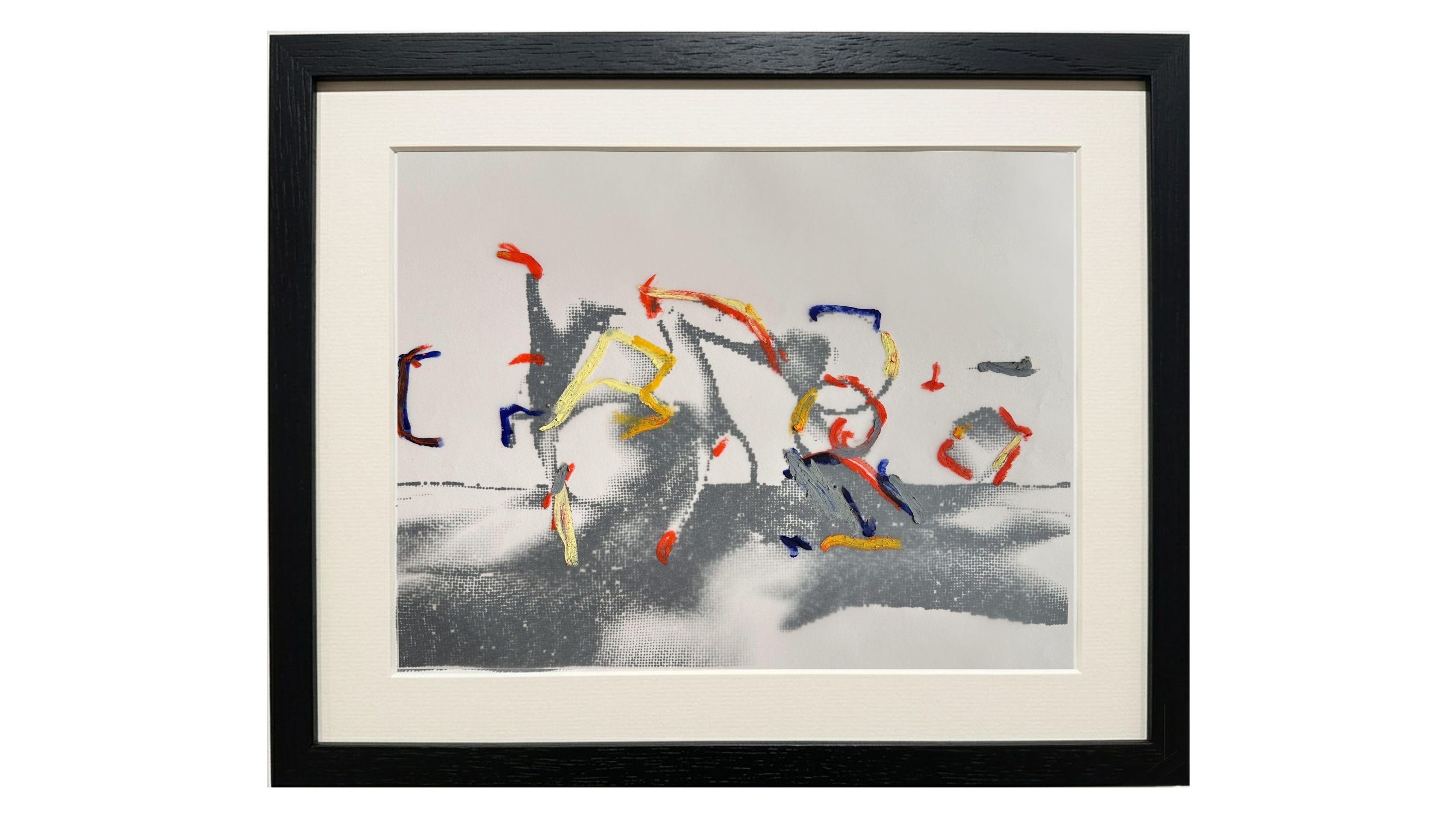
DOS is a complementary detour to Paysages Plausibles with designs that seem to nod toward a 1961 painting by Frankenthaler, Black with Shadows. Mapan says: “Where Paysages Plausibles investigates the construction of speculative territories, DOS follows the movements, traces, and residual energies that inhabit them, revealing structures embedded in the main series but made newly visible through the plotter's language of contour, repetition, and displacement.” The resulting aesthetic is a background of shadowy black ink on paper, overlaid with boldly colored oil pen outlines that dance over the underlying shadow, much like the stains in Frankenthaler’s painting that move rhythmically around the black saturation at the center. 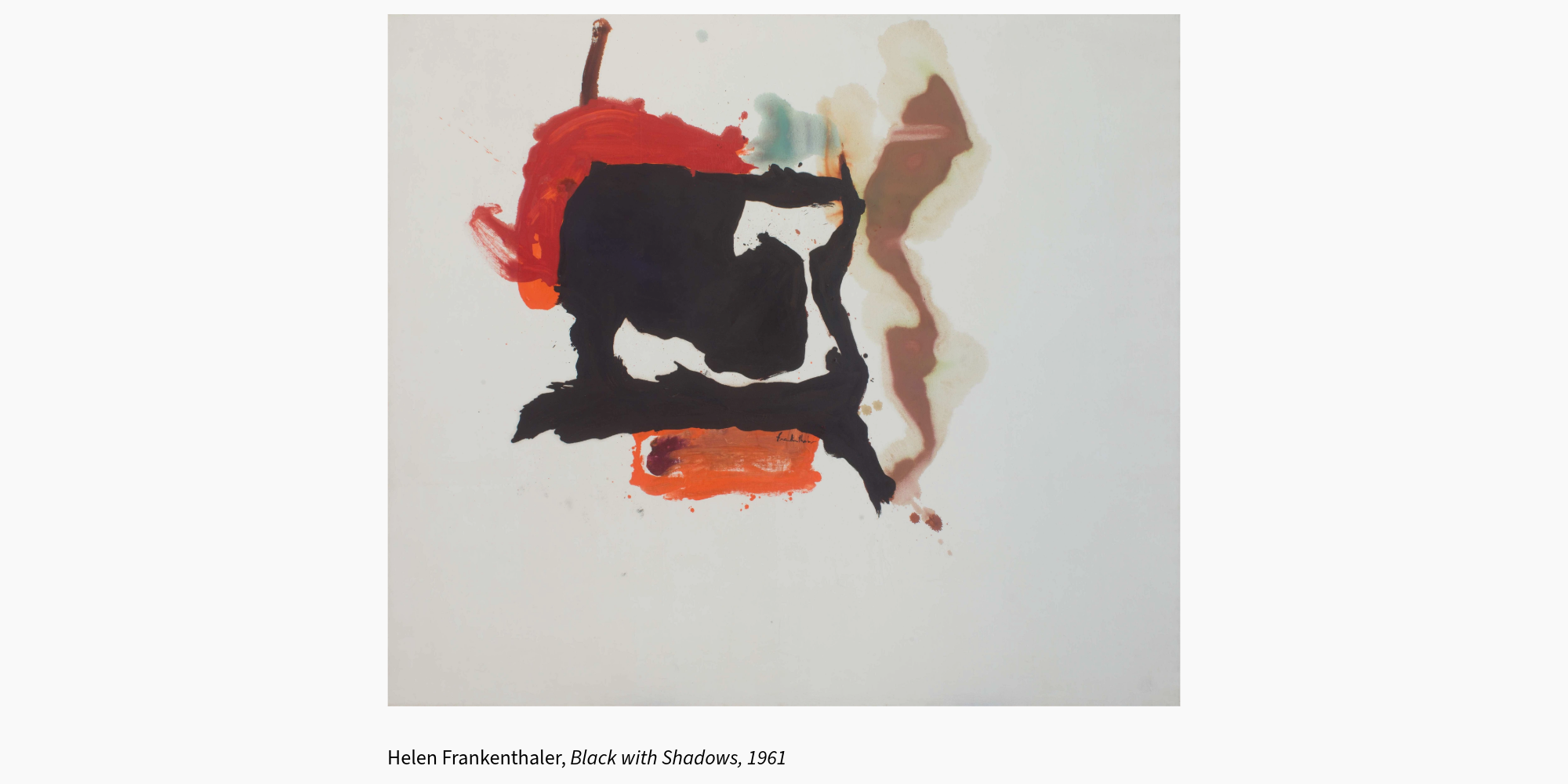
If part of the purpose of art is to help us see the world in new ways, William Mapan is excelling. In Paysages Plausibles, he is carrying on the legacy of artists who have moved beyond traditional rules to challenge assumptions about how art can be created using unconventional mediums and methodologies to help us interpret the world around us. The root of the word “plausible” is worth noting here. It originally comes from the Latin “plausibilis” which means “worthy of applause.”
Many thanks to our photographer, Federico Floriani, who provided the artwork and studio shots for William Mapan.
The Paysages Plausibles series by William Mapan will be on view at Art Basel Zero 10, Booth Z13, from June 16 - 21, 2026, in Basel Switzerland. To inquire about pre-sales, please email sales@artblocks.io. Follow Art Blocks on X and Instagram for updates.